What Age Do Kids Stop Believing in Santa? (And How to Keep the Magic Alive)

Most children stop believing in Santa Claus around age 8, though anywhere from age 5 to 11 is completely normal. There is no single moment when the magic switches off. For most kids, belief fades slowly as they grow, hear theories from friends, and start to reason about how one sleigh could possibly reach every house in one night. Here is the part worth holding onto: that window is yours to protect. With a few thoughtful, believable details, you can help your child keep the wonder of Santa for one more Christmas, and turn the whole experience into a family memory that lasts long after they know the full story.
What age do kids stop believing in Santa?
Large surveys land on a similar answer. According to the University of Exeter international Santa survey, the average age children stop believing in Santa is about 8. What matters more than the average is that the range is wide and every child is different. A thoughtful 6 year old might start asking sharp questions early, while a tender hearted 10 year old happily believes for years. Neither is ahead or behind. Belief is tied to imagination and temperament, not just age.
Here is a simple way to think about where most kids are, and what helps keep the wonder alive at each stage.
| Age | Where most kids are with Santa | What helps the magic last |
|---|---|---|
| Ages 3 to 5 | Pure belief. Magical thinking is at its peak. | Simple sensory wonder: a bell, reindeer food, cookies for Santa. |
| Ages 6 to 8 | Strong belief, with the first real questions appearing. | Personalized proof: a letter that knows real details about them. |
| Ages 9 to 10 | Active questioning. Doubt from friends at school. | Credible, specific evidence and keepsakes they can hold. |
| Age 11 and up | Many know, and some choose to keep believing anyway. | Invite them to become a 'secret Santa' for younger siblings. |
Why do kids stop believing in Santa?
It usually comes down to three things, and none of them mean you did anything wrong. First, your child's brain is growing. Somewhere around age 7 or 8, kids develop the logical reasoning to ask how the math of Christmas Eve actually works, and they start testing the answers. Second, friends talk. One confident classmate can plant a seed of doubt faster than any parent can. Third, kids notice details: similar handwriting, a price tag, a gift that showed up early. When belief fades, it is a sign of healthy development, not a magical failure. Your job is not to trick a curious child. It is to give an imaginative one enough wonder to keep choosing to believe.

Signs your child is starting to question Santa
Most kids send up little flares before they stop believing. You might notice your child asking how the reindeer fly, comparing notes with friends after school, or testing you with a pointed question to see how you react. Some get quietly watchful, studying the wrapping paper or the handwriting on a tag. None of this means the magic is over. It means your child is right at the doorway, and a little authentic North Pole proof can be exactly what keeps them on the believing side for one more year.

A note from our family: Package From Santa® began with one wrong-name letter. Back in 2005, our son Chase opened a letter from Santa that used the wrong name, and we watched the magic wobble in real time. We have spent every year since making sure no child feels that. Getting the small details right is the whole job.
❤ Carey and Dale, Founders of Package From Santa®
How to keep the magic of Santa alive (without lying to your kids)
Here is the reframe that takes the guilt out of it: keeping Santa alive is not about deceiving your child. It is about protecting wonder. The spirit of Santa, generosity, kindness, and the joy of giving, is completely real, and that is the part you are really keeping alive. The magic gets more believable, and feels less like a fib, when it is built on three things.
Personalization. Santa knowing your child's name is sweet. Santa knowing the tiny victory they are proud of, the pet they adore, or the kind thing they did last week is the detail that makes a child go quiet with wonder. When the magic reflects their real world, it feels true.
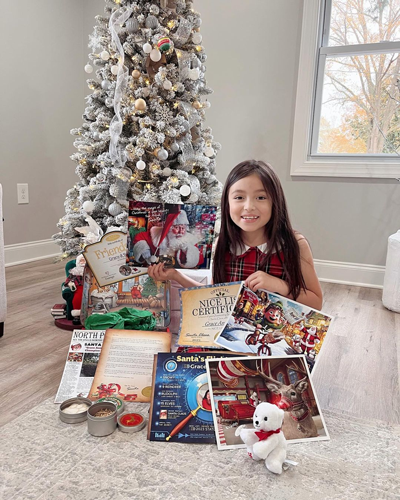
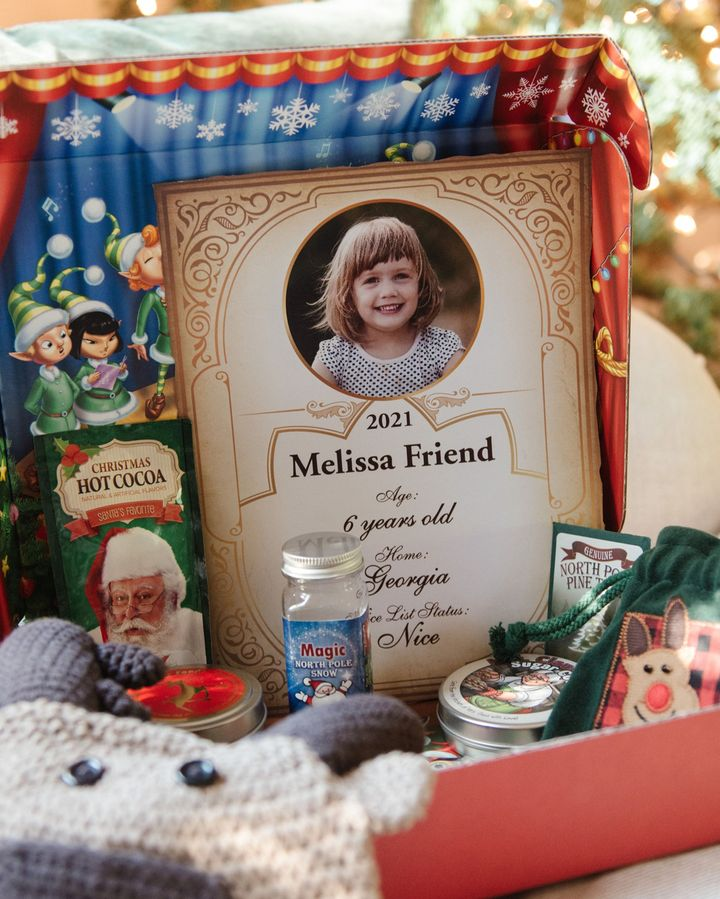
Authentic proof. One generic letter can feel flat. A coherent set of North Pole details working together, parchment, a gold wax seal, a postmark, a Nice List certificate, feels real because every piece supports the story. If your child starts asking where all of it comes from, here is where Santa lives, and what the North Pole is really like in the summer.
Shared tradition. The magic that lasts is the magic you repeat. Leaving reindeer food on the lawn, a cookie for Santa, an annual letter that arrives in the mailbox: these rituals give your child something to look forward to and, later, something to remember. You bring the love. The right details help turn it into a North Pole moment without asking you to build every piece yourself.

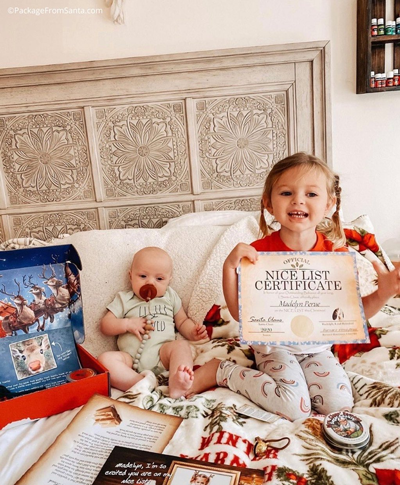
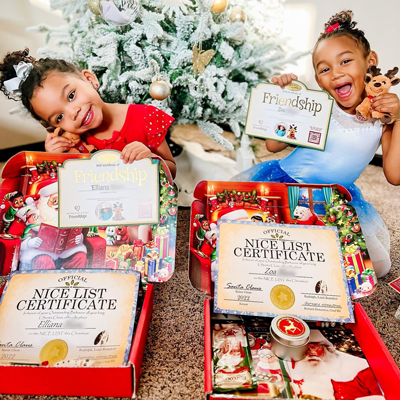
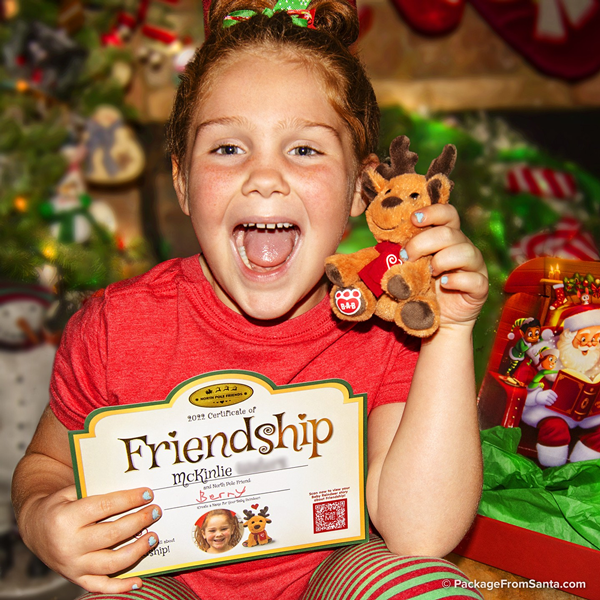
For a child who is right on the fence, a single official looking keepsake can tip the scales back toward belief. A Nice List certificate with their name and a gold foil seal is something they can hold, show their friends, and frame on the wall, and it quietly says: Santa knows you, and he is paying attention.

'We have been buying Package From Santa since 2016, and my son is now 11 years old and still believes in Santa. This package has become such a tradition for our family... I indulge my son's belief in Santa because kids are forced to grow up so fast and I think it is important for kids to be kids and believe in magic!'
- Nancy P., Georgia - Verified Buyer
What to say when your child asks if Santa is real
One day the question comes, plain and direct: 'Is Santa real?' You do not have to decide the whole truth in a panic. The kindest move is usually to follow your child's lead. A gentle 'What do you think?' tells you whether they want reassurance or are ready for more. Younger children are often just looking for comfort, and a warm answer about the spirit of Santa keeps the wonder intact. For an older child who clearly knows, many families use the 'you are ready to be a Santa now' conversation: a loving moment where the child is welcomed into the secret of giving rather than let down by it. Handled with warmth, that talk becomes a rite of passage, not a loss.
Frequently asked questions
What age is too old to believe in Santa?
There is no age that is too old. Plenty of 11 and 12 year olds still enjoy the tradition, and some choose to keep believing because they love the magic. Belief is not about being naive. It is about wonder, and wonder is welcome at any age.
Is it bad to let my child believe in Santa?
No. Imaginative play is a healthy part of childhood, and there is no good evidence that the Santa tradition harms a child's trust in their parents. Most kids work out the truth gradually and on their own terms, and a caring approach keeps the experience positive.
Why do kids stop believing in Santa so much earlier now?
Earlier exposure plays a part: more screen time, older siblings, and quick answers online. Even so, the average has stayed fairly steady at around age 8. A personalized, believable experience can still hold a child's wonder right through the questioning years.
How do I keep an older child believing in Santa?
Lean on credible, specific proof rather than insisting. A letter that references real details from their life, a Nice List certificate they can hold, and consistent yearly traditions all make the story feel true to a sharper, older mind.
Do kids feel betrayed when they find out Santa is not real?
Most do not. In the University of Exeter survey, about a third of people recalled some sadness on finding out and roughly 15 percent felt let down, yet the large majority took it in stride. A study of children who had just learned the truth found their trust in their parents stayed about the same. Framing the moment as joining the secret of giving, rather than losing something, makes the transition a happy one.
Make this the year the magic lasts
A personalized letter from Santa that knows your child by name, ready to spark one more Christmas of wonder.
Create their Santa letter →Personalized with your child's real details and shipped from the North Pole.

About the author
Co-Founder, Package From Santa®
Carey is a co-founder of Package From Santa® and a parent who has spent more than 20 years helping families create believable, personalized Christmas magic. Known around the North Pole as Elf Carey.
Related reading: Where does Santa live? Inside the North Pole in summer on the Package From Santa® blog.